Let more growers get greater benefits
How to Optimize Ammonium Sulfate Fertilization by Soil pH
- Industry News
- January 28, 2026
- 4:10 pm
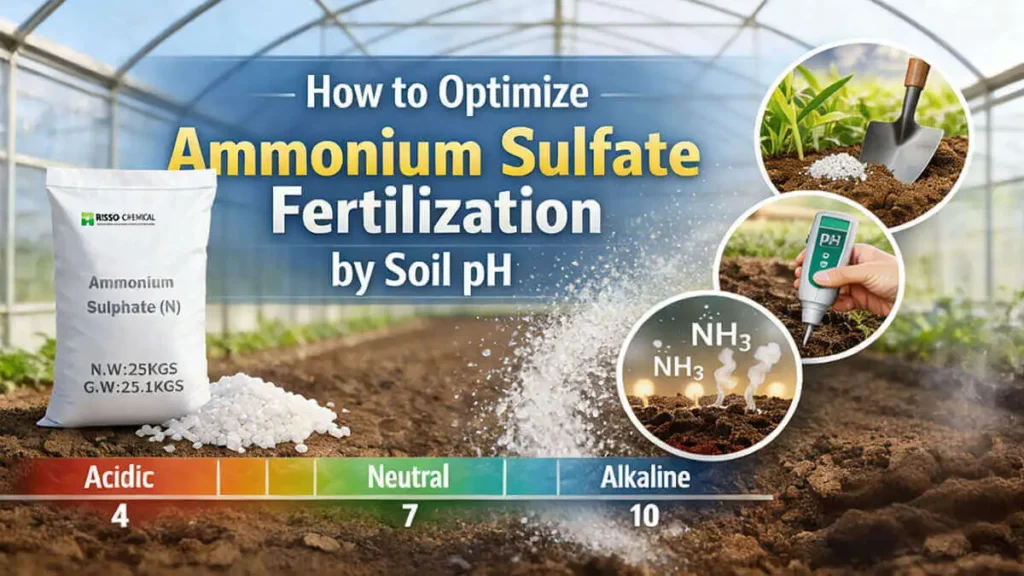
This article explains how soil pH influences ammonium sulfate performance and provides practical, pH-based fertilization strategies to improve nitrogen use efficiency, reduce ammonia volatilization, and support sustainable crop nutrition, with technical insights from Risso.
Table of Contents
- 1. Why Soil pH Matters in Ammonium Sulfate Fertilization1. Why Soil pH Matters in Ammonium Sulfate Fertilization
- 2. How Ammonium Sulfate Interacts with Soil pH2. How Ammonium Sulfate Interacts with Soil pH
- 3. Optimized Ammonium Sulfate Application Strategies for Different Soil pH Levels3. Optimized Ammonium Sulfate Application Strategies for Different Soil pH Levels
- 4. Soil pH, Ammonia Volatilization, and Nitrogen Use Efficiency4. Soil pH, Ammonia Volatilization, and Nitrogen Use Efficiency
- 5. Practical Recommendations for pH-Based Fertilizer Management5. Practical Recommendations for pH-Based Fertilizer Management
- 6. Conclusion: Toward Precision Fertilization Based on Soil pH6. Conclusion: Toward Precision Fertilization Based on Soil pH
1. Why Soil pH Matters in Ammonium Sulfate Fertilization
Ammonium sulfate fertilizer, valued for supplying ammonium nitrogen (N) and sulfur (S) simultaneously, performs very differently across acidic, neutral, and alkaline soils. Understanding this interaction allows growers and fertilizer professionals to design more efficient, economical, and environmentally responsible fertilization programs.
2. How Ammonium Sulfate Interacts with Soil pH
Because of this reaction pathway, ammonium sulfate is classified as a physiologically acidic fertilizer. Its acidifying effect can be beneficial in alkaline soils but may pose risks in already acidic environments if not properly managed.
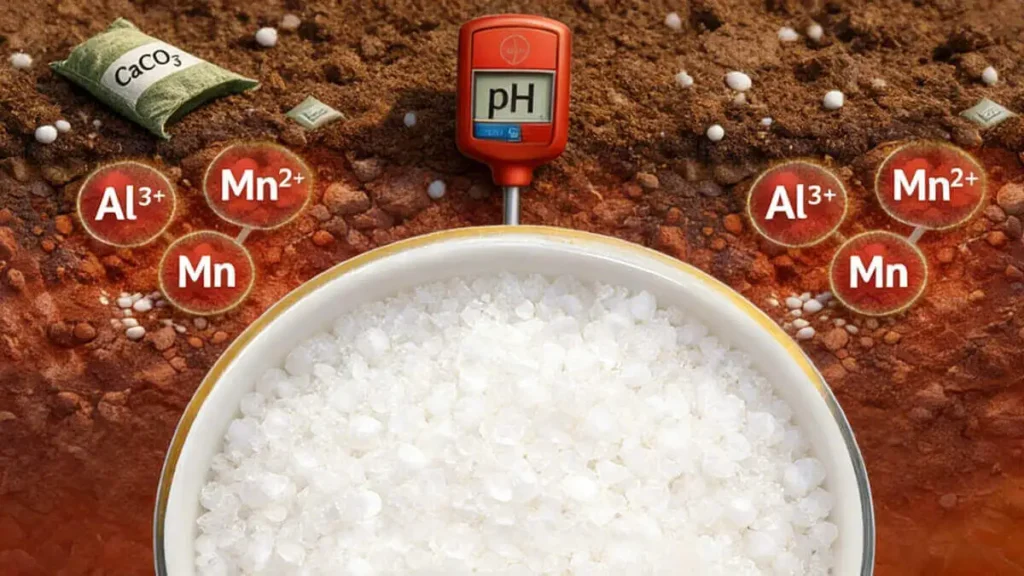
3. Optimized Ammonium Sulfate Application Strategies for Different Soil pH Levels
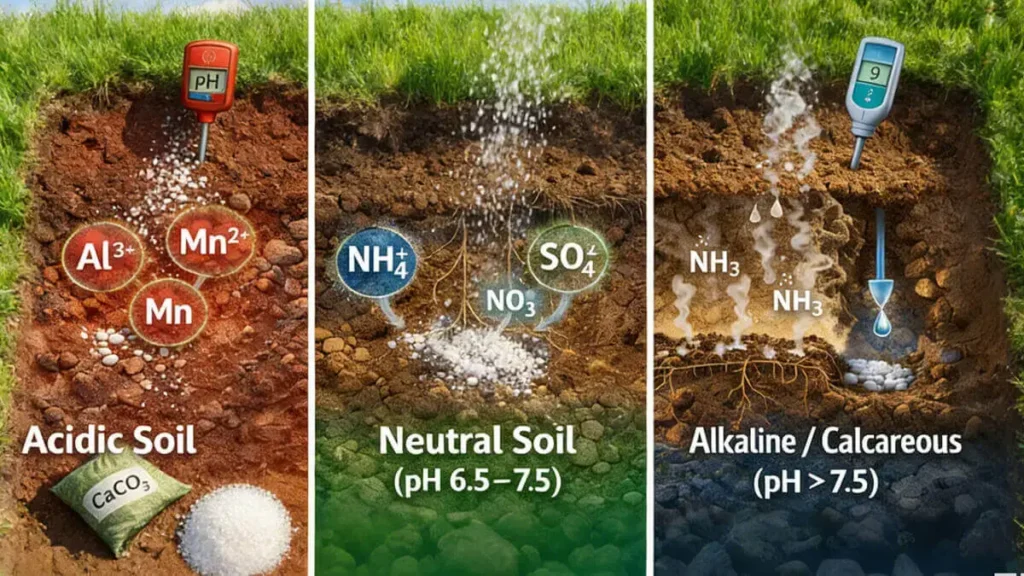
3.1 Ammonium Sulfate in Acidic Soils (pH < 6.5)
- Use ammonium sulfate as a supplemental nitrogen and sulfur source, rather than the sole nitrogen fertilizer
- Avoid continuous high-rate applications over multiple seasons
- Combine with liming materials to buffer soil acidity when long-term use is required
- Consider integrating nitrate-based or neutral nitrogen fertilizers to maintain nutrient balance
3.2 Ammonium Sulfate in Neutral Soils (pH 6.5–7.5)
In practice, ammonium sulfate is particularly effective in neutral soils for crops with high sulfur demand, such as oilseeds, cereals, and many cash crops. Strategic placement as a basal fertilizer or during early vegetative growth stages can significantly improve nitrogen use efficiency.
Many fertilizer programs developed by Risso for international markets are designed around this pH range, where ammonium sulfate demonstrates both agronomic reliability and economic value.
3.3 Ammonium Sulfate in Alkaline and Calcareous Soils (pH > 7.5)
- Deep placement or band application to limit surface exposure
- Immediate irrigation or application before rainfall
- Combining ammonium sulfate with neutral or slow-release fertilizers
- Avoiding application during hot, dry, and windy conditions
4. Soil pH, Ammonia Volatilization, and Nitrogen Use Efficiency
From a fertilizer management perspective, reducing volatilization is essential not only for economic reasons but also for minimizing nitrogen losses to the atmosphere. Proper placement, timing, and moisture management are therefore critical components of ammonium sulfate application strategies.
5. Practical Recommendations for pH-Based Fertilizer Management
- Conduct soil testing before each growing season to determine pH and nutrient status
- Adjust application rates and timing based on crop growth stage and soil reaction
- Avoid surface application on high-pH soils without incorporation or irrigation
- Monitor long-term soil pH trends when ammonium sulfate is used regularly
This data-driven approach supports precision fertilization, helping growers achieve higher nutrient efficiency and sustainable yields.
6. Conclusion: Toward Precision Fertilization Based on Soil pH
Risso continues to support global partners with technically sound fertilizer solutions and agronomic insights, enabling more precise nutrient management across diverse soil environments.
7. Frequently Asked Questions (FAQs)
Ammonium sulfate is best applied before planting or during early crop growth to meet nitrogen and sulfur demand and improve nutrient uptake efficiency.
Yes. Ammonium sulfate has an acidifying effect due to nitrification, making it suitable for neutral to alkaline soils but requiring caution in acidic soils.
Ammonium sulfate supplies both nitrogen and sulfur, offers stable ammonium nitrogen, and improves micronutrient availability in high-pH soils.
Yes. Continuous use can gradually lower soil pH, so long-term programs should include regular soil pH monitoring and corrective practices.
Yes. It provides readily available sulfate sulfur, making it effective for crops with high sulfur demand such as cereals, oilseeds, and cash crops.
Urea Fertilizer related products
If you want to know other questions about Ammonium sulfate, please contact us and we will provide professional answers.
- Article
What will you get when touch?
✔ Quick & helpful reply within 6 hours.
✔ Tailored solutions for your project.
✔ One-stop product, tech, market