
2026-03-03
Many growers ask the same question:
“Since I can apply urea (N), DAP (mainly P + some N), and potash (K) separately, why do I need NPK fertilizers?”
The answer goes well beyond convenience. Balanced NPK fertilization directly influences crop physiology, nutrient uptake, yield stability, product quality, and environmental sustainability. Below is a comprehensive, research-based explanation designed for growers, agronomists, and agricultural enterprises.
Risso Fertilizer brings you a science-based explanation of why balanced NPK fertilization outperforms applying single-nutrient fertilizers alone—especially for sustainable, high-yield crop production.
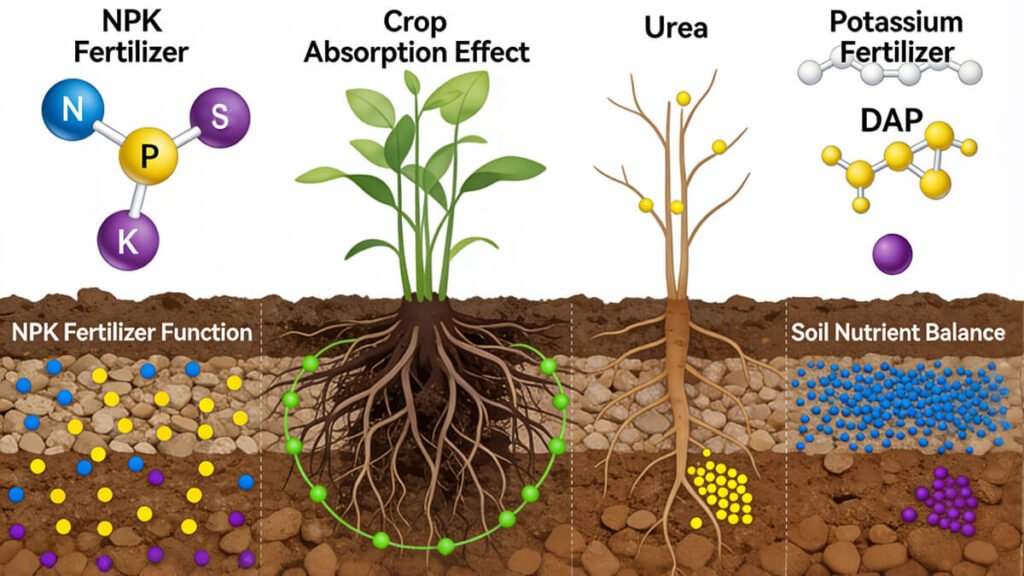
Drives vegetative growth, leaf expansion, and chlorophyll formation. Essential for proteins and nucleic acids. N deficiency leads to stunting and chlorosis.
Critical for root establishment, energy transfer (ATP), flowering, and seed/fruit development. P deficiency reduces rooting, delays flowering, and lowers reproductive performance.
Regulates water balance, strengthens stress resistance, enhances enzyme activity, and improves fruit quality (sugar content, firmness, storage life).
Conclusion: N, P, and K function like “protein, energy, and minerals” in human nutrition—each a fundamental requirement that works best when supplied together in balance.
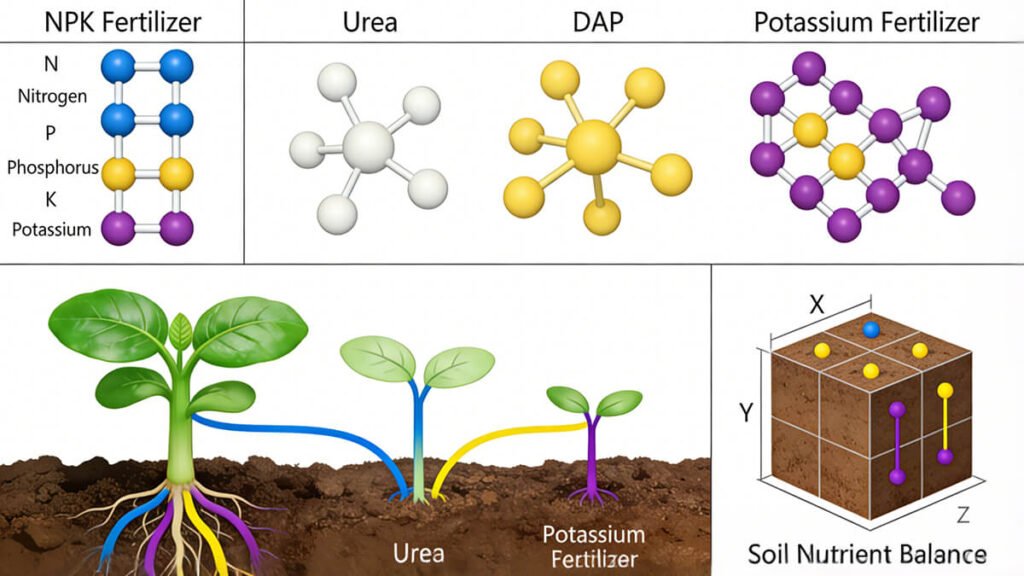
Crop demand for N, P, and K changes with phenology (e.g., N for early vegetative growth, P/K for flowering and fruiting).
NPK formulas deliver the correct ratio in a single, synchronized application, preventing limitations caused by any single nutrient deficiency.
Recommendation:
Apply single-nutrient fertilizer first (e.g., DAP for P deficiency),
then switch to NPK for balanced follow-up feeding.
Recommendation:
Use NPK as the base + follow-up applications, ideally with enhanced-efficiency or controlled-release formulas for maximum nutrient-use efficiency.
Recommendation:
Short-term: urea + potash split applications.
Long-term: conduct soil testing and transition to NPK for stability, quality, and soil health.
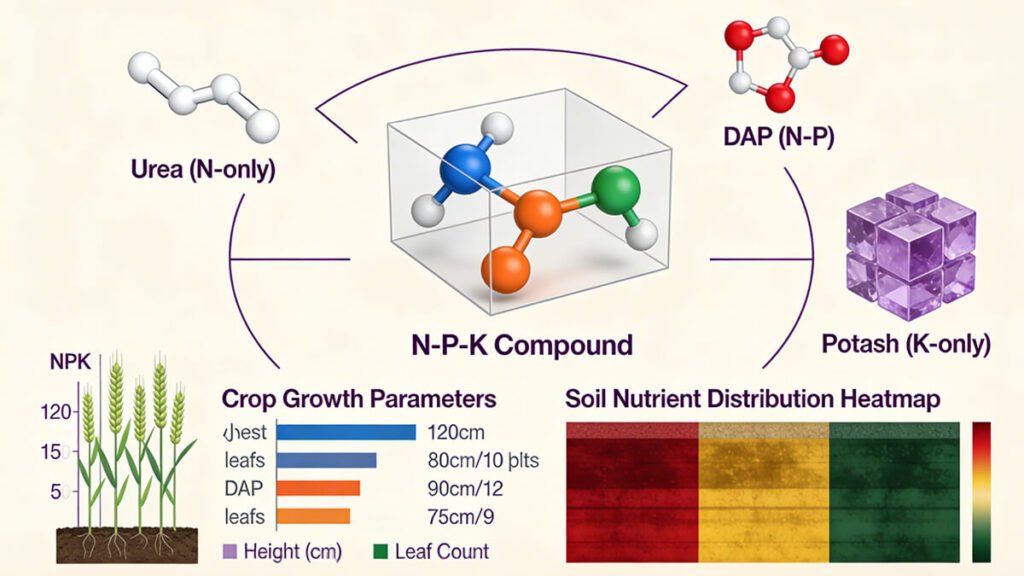
Unit cost may differ, but balanced NPK provides higher ROI due to improved yield, quality, reduced crop stress, and lower environmental loss.
Possible for short term (using general-purpose formulas).
But soil testing is strongly recommended for long-term efficiency and sustainability.
Organic fertilizers improve soil structure and microbial activity,
but release nutrients too slowly to fully meet crop demand.
The best approach is organic + NPK integration.
If you only have urea, DAP, and potash, you can temporarily mix them to fill nutrient gaps.
However, for long-term efficiency, higher yields, better quality, and environmental protection, the most effective solution is:
Risso Fertilizer supports growers with scientifically optimized nutrient-management solutions for healthier crops, healthier soils, and more sustainable productivity.
If you want to know other questions about NPK Fertilizer, please contact us and we will provide professional answers.
✔ Quick & helpful reply within 6 hours.
✔ Tailored solutions for your project.
✔ One-stop product, tech, market

Want to find a China fertilizer manufacturer?
Risso will be your best choice; send us your request for your fertilizer details requirement
© Copyright 2017 RISSO CHEMICAL. All Rights Reserved.